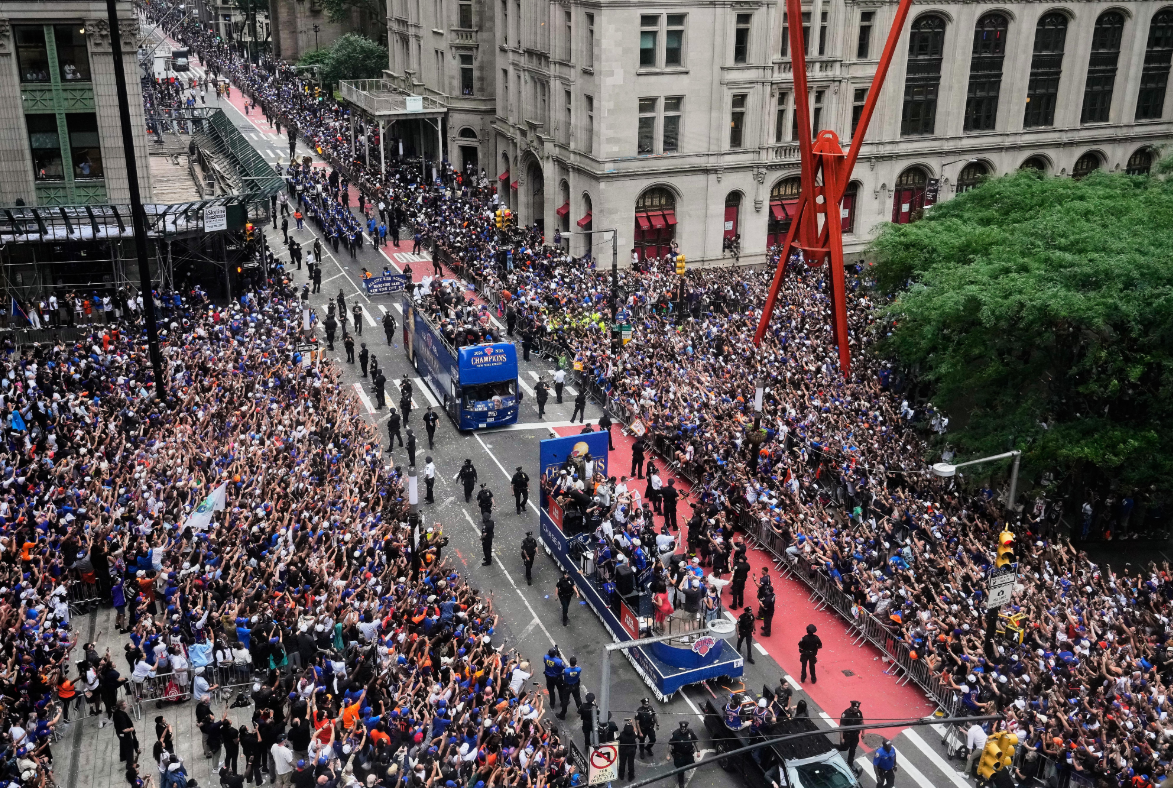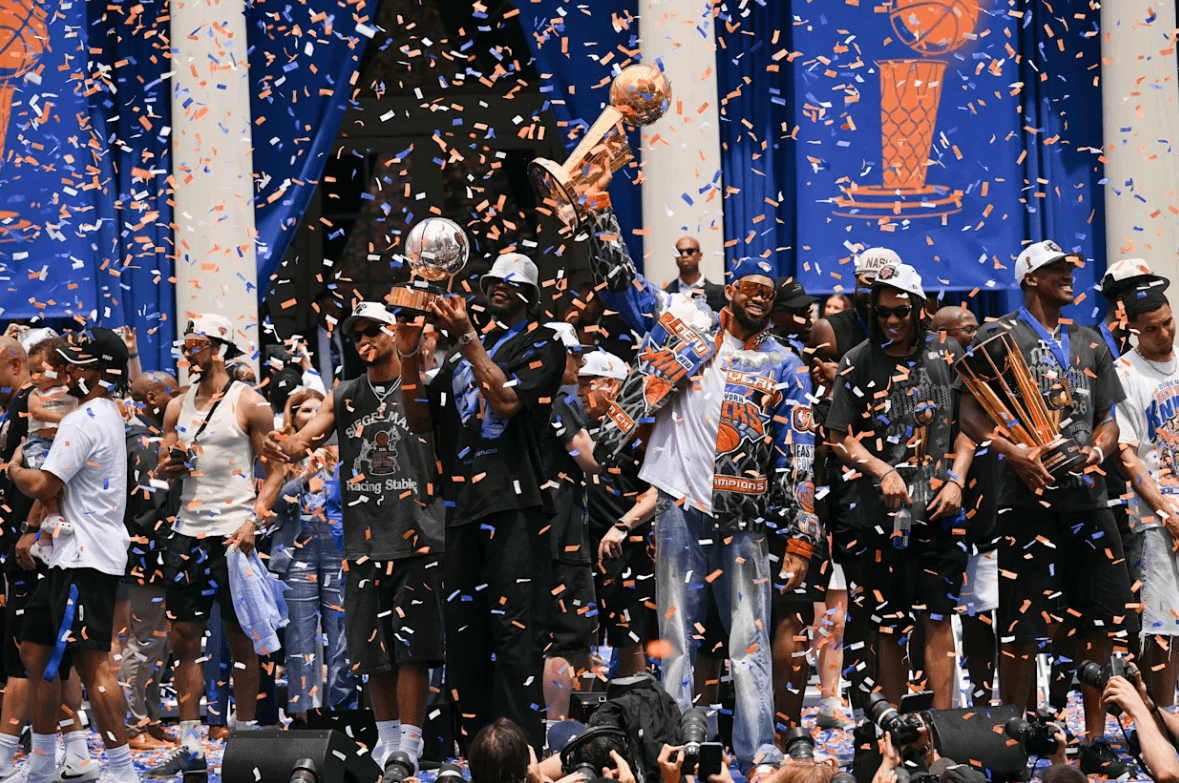
The New York Knicks’ championship parade turned into more than just a basketball celebration—it became a full-scale tribute to the city’s hip-hop legacy. After the Knicks captured their first NBA title in 53 years, New York brought together sports, music, and culture for a historic victory parade through Lower Manhattan.
The parade, held on June 18, marked the first ticker-tape parade in Knicks history and celebrated a championship run that ended decades of frustration for fans. The route began near Bowling Green and moved north along Broadway through the Canyon of Heroes before ending at City Hall, where the team was honored during a public ceremony.
One of the biggest highlights was the hip-hop float led by Fat Joe. The Bronx rapper, a longtime Knicks supporter, helped bring together a lineup of New York music legends to celebrate the team’s long-awaited title. Artists connected to the float included Remy Ma, Wu-Tang Clan, Mobb Deep, M.O.P., Mary J. Blige, Q-Tip, Fabolous, Ja Rule, The LOX, Jadakiss, and Yung Miami.
Fat Joe described the moment as pure euphoria, emphasizing how much the championship meant to New York after more than five decades without a Knicks title. For him, the parade represented more than a win on the court—it was a citywide release of pride, joy, and cultural energy.
The event also featured other major celebrity appearances, including Spike Lee, Tracy Morgan, Ben Stiller, Mary J. Blige, Alicia Keys, and more. Alicia Keys helped close the celebration with a performance of “Empire State of Mind,” giving the day another unmistakably New York moment.
With hip-hop icons riding alongside a championship team, the parade became a symbol of how deeply the Knicks are tied to New York culture. For decades, rappers, entertainers, and fans kept the team’s spirit alive through music, courtside appearances, and city pride. Now that the Knicks have finally delivered another title, the celebration felt like hip-hop and basketball sharing the same victory lap.
The Knicks’ championship parade wasn’t just about honoring the players—it was about celebrating New York itself. From the streets of Lower Manhattan to the sound of classic rap anthems, the day captured the energy of a city that had waited generations for this moment.