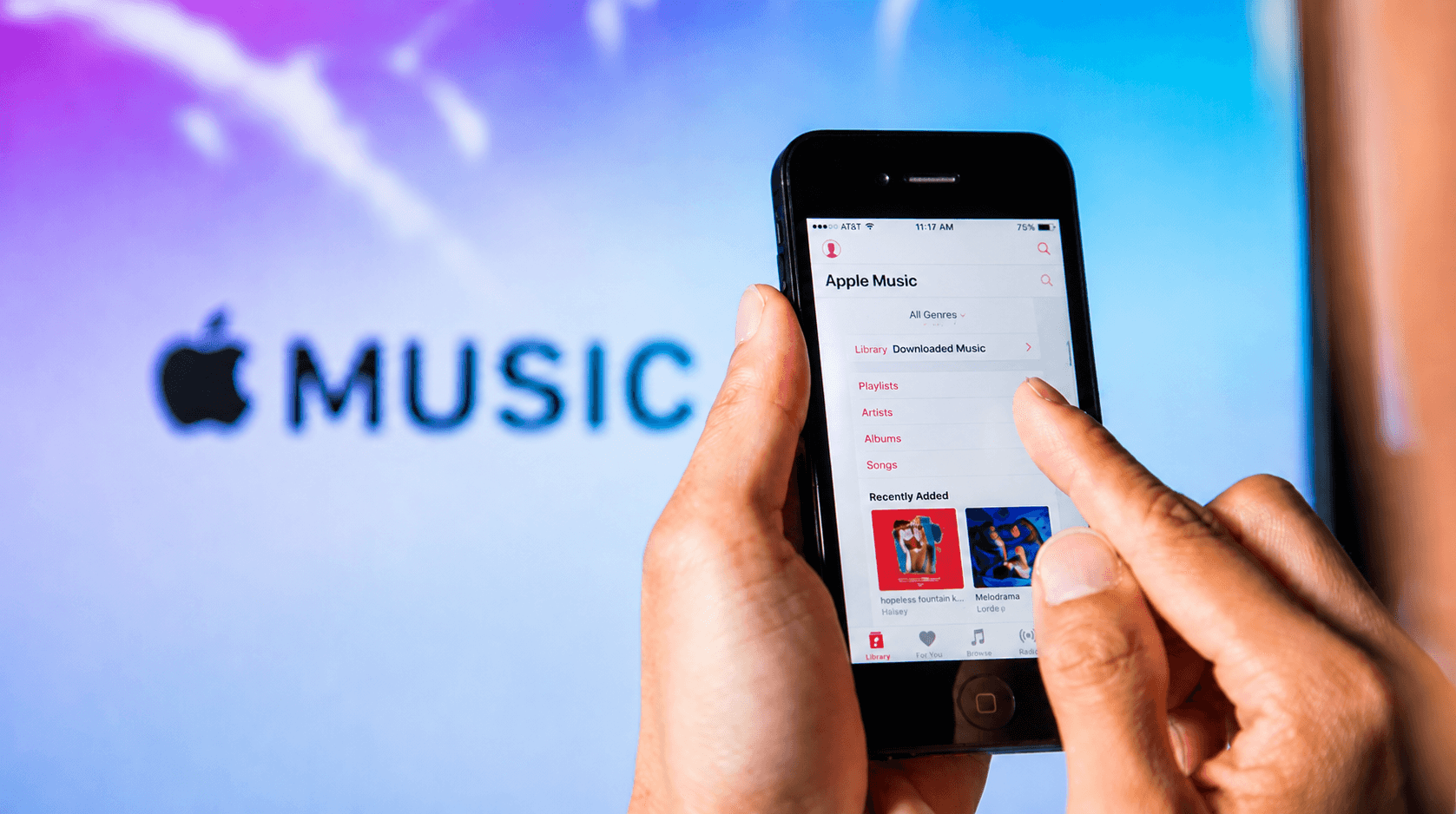
Apple Music is preparing to make artificial intelligence disclosures more visible on its platform. The streaming service will soon require labels, distributors, and other music providers to identify songs and related content that were created with significant help from AI.
According to Complex, Apple Music sent an email to industry partners explaining that any content where AI created a “material portion” must include the proper AI Transparency Tags. Once those tags are applied, listeners will eventually see a visible “Made With AI” label on Apple Music.
The update is expected to roll out later this year. While Apple Music has already introduced AI disclosure tools, the system was previously optional. This new move turns AI labeling into a required part of the delivery process for music providers.
The policy applies to more than just full songs. Apple’s AI Transparency Tags can be used for sound recordings, compositions, artwork, and music videos. That means if AI played a major role in creating the music, writing parts of a composition, generating cover art, or shaping a video, providers will be expected to disclose it.
Apple also defines AI platform-generated content as anything that is primarily created through a generative AI service. In simpler terms, if a track is mostly produced or built by an AI tool instead of human creators, it should be labeled clearly for users.
The goal of the change is transparency. As AI music becomes more common, streaming platforms are under pressure to help listeners understand whether they are hearing human-made music, AI-assisted music, or music that is almost entirely generated by artificial intelligence.
Apple Music’s decision comes at a time when AI is becoming a major debate across the music business. Some artists and producers see AI as a useful tool that can speed up ideas, assist with production, or open new creative possibilities. Others worry it could hurt human creativity, create fake songs, clone artists’ voices without permission, and flood streaming platforms with low-effort content.
The issue is already growing quickly. Apple Music Vice President Oliver Schusser previously revealed that more than one-third of the platform’s monthly uploads were fully AI-generated, even though those songs accounted for less than 0.5 percent of actual listening. That shows AI-generated music is entering platforms at a high volume, even if listeners are not engaging with it at the same level.
The wider music industry is also working on clearer AI labeling standards. Groups including the IFPI, RIAA, A2IM, WIN, IMPALA, the Recording Academy, SAG-AFTRA, and the Human Artistry Campaign recently supported a voluntary two-tier system that separates “AI-Generated” recordings from “AI-Assisted” recordings.
Under that proposal, AI-assisted music would still need to be substantially created by humans, with human performers handling the lead vocals and main instruments. AI-generated music, on the other hand, would refer to recordings where artificial intelligence plays the main creative role.
Apple Music has not announced the exact date when the “Made With AI” labels will appear for users. However, the company’s move signals that AI disclosure is becoming a bigger part of how streaming platforms manage music.
For artists, labels, and distributors, the update means they will need to be more careful about how they report AI involvement when uploading content. For listeners, it could make it easier to understand what kind of music they are consuming and how much human creativity was involved.
As artificial intelligence continues to reshape music, Apple Music’s labeling system may become an important step toward trust, accountability, and clearer boundaries between human-made art and machine-generated content.